
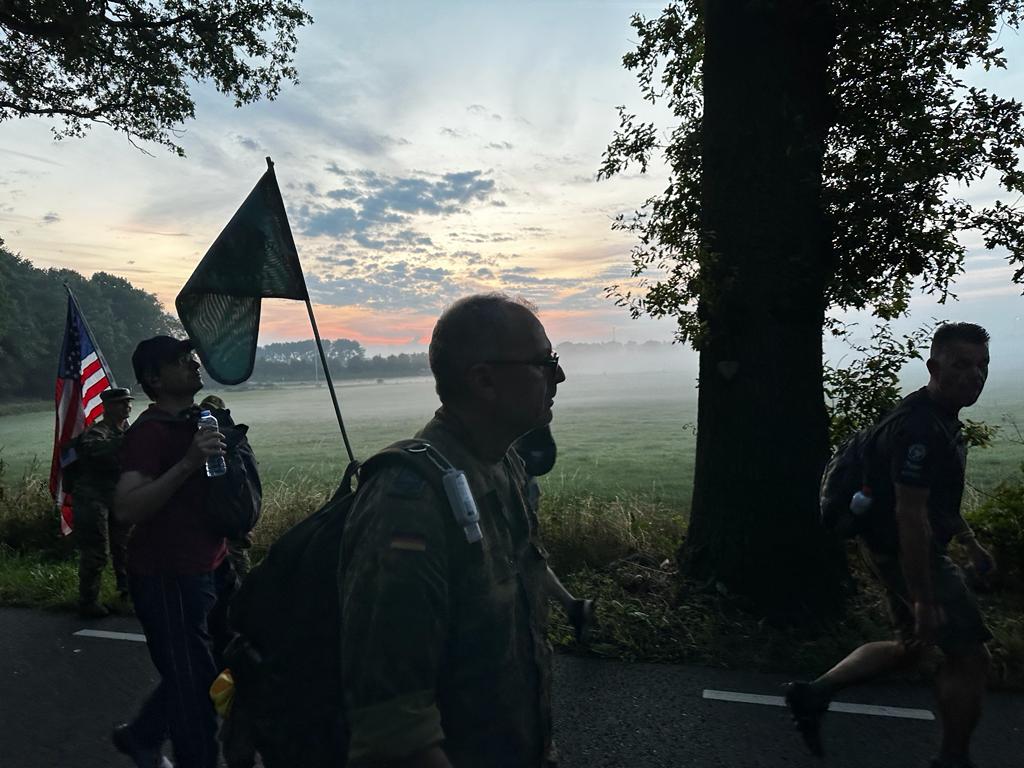
Practice marches are key to being prepared for the Vier Daagse and being able to embrace the pleasure of the event.
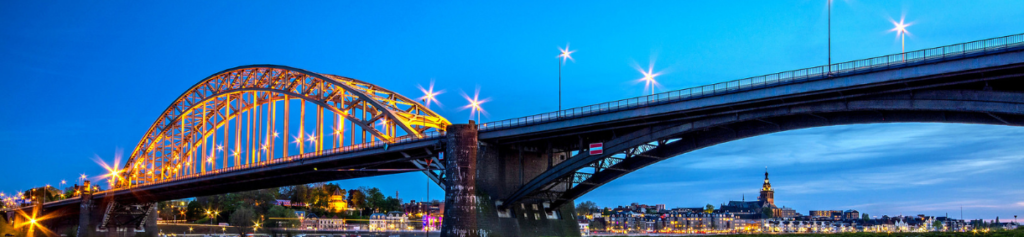
As Nijmegen is 100% on asphalt it is important to protect your feet fully and a good pair of boots are required to achieve this. It can be that your comfortable boots for work simply will not work when walking long distances over multiple days.
Military Issue boots can take a long time to break-in so at this point it is not advisable to change these types of boots. What I would like to suggest is that you start to look at a cheaper option second pair of boots that you can obtain in a larger size to take with you (second pair).
From Experience if you have size 9 Feet then size 9 Boots are unlikely to get you through such events without getting blisters. We would suggest that you obtain a second pair of boots which are 1.5 sizes larger than your usual size (depending on what scale is used). American scale 1 size larger, EU scale 1.5 sizes larger, UK scale 2 sizes larger. This will allow for feet swelling which does occur in Nijmegen. I have often observed personnel on day 3 of Nijmegen unable to get their feet into their boots! This is caused by feet swelling. Feet also naturally swell whilst you are sleeping.
Worth checking now your actual foot size, I know this sounds strange as we all know our foot size. However, during a recent visit to buy boots my feet were measured and I was no longer a size 41 but a 42. The larger size was because the arch in your feet begin to drop as you get older and this increases the length of your foot, therefore please measure your feet. Often we buy shoes/boots without measuring our feet.
Having good boots is all well and good but generally, all boots come with insoles, which are hard and not ideal for long distance repetitive walking on a hard surface. I suggest that you take out your hard insoles and throw them away. The insole is a very impart part of the boot and deserves a good insole. I recommend gel insoles that provide a good bit of cushion.
Blisters occur at Nijmegen as the walking surface is very hard (Asphalt) and this coupled with warm weather in July makes your feet sweat and this leads to friction, swelling of the feet making your boots too small all has the affect of creating blisters.
Often we hear people saying that they need to harden the soles of their feet and use substances to make the Skin go hard. We advise against this information. The best condition for the soles of your feet is soft skin. To achieve this, you need to start taking away all the hard skin and a foot scraper can achieve this. From now until Nijmegen, start weekly to rub away all that hard skin. This will clean/Soften your feet and to your surprise you may uncover some old blisters. Having hard skin aids the creation of blisters as the blisters can form under the hard skin. Hard parts of the feet can also cause soreness.
So take away all that hard skin and the hard skin that can form on the side of the big toe and the excess skin that can form under the small toe (Line of skin under small toe cause by small toe slightly folding under other toes). In addition to removal of hard skin also use a cream to get conditioning into the skin.
While marching, a thicker lubrication to be thickly covered around your toes: Skin Lube or Vaseline should be applied. Place the lubrication in and around your toes where it will feel wet in your socks but its ok the toes will be fully lubricated and will reduce friction thus reducing blisters. Regular application at the rest areas during the day keeps the toes in good shape.
Toe Nails: One week before Nijmegen cut your toenails, don’t cut your nails near the event in case you cut nails too short. Before departure or at Nijmegen file down your nails.
Taping: Now, your feet are soft and your toe nails are fully smooth it is time to prepare your feet for walking. I appreciate it that some experienced walkers may not tape their feet.
Prevention is better than the cure!
To fully prepare your feet we need some basic products but the most important is Zinc Oxide sports tape. Important that you get the tape that is 2 or 2.5 Cm Wide. The team will attempt to get as much as possible but I highly recommend that each person obtains some that you carry in your back pack as part of your personal medical kit. This is then also a part of your 10Kgs weight.
If you can also try to get hold of Dr scholls Mole Skin, This is padded material. We can cut this to cover the soles of your feet and then tape over it with Zinc Oxide tape. Please note the you need the thin padding 5/8 x 3/8 . This produce also availabl in a roll. Normally this will be available in US Stores and possibly in the store in Geilenkirchen.
We then tape over the padding with the Zinc Oxide Tape. The tape can also be used to tape the outside of big toe and the small toe but best protection for small toes is lubrication and enough room in the boots.
Additional item which is very useful is spray Glue. The team will try to obtain this. However, if you are able to get some that would also be helpful. Spray glue allows us to spray the foot before applying the tape, this makes the tape stick much better as it can often become unattached due to warm or wet feet.
Following these tips should focus the mind on blister prevention. Preventing blisters will ensure you have an enjoyable week and finish the event. Collecting blisters just causes the opposite and has a negative impact on your team. Look after yourself and this will help yo
(Men under the age of 50) Your Backpack must weight 10 kgs (22.046 pounds). The weight of 10Kgs is without any food or water.
Common injures from the backpack are rubbing causing sores on the lower back and rubbing in the area of the armpit. These issues can be easily be avoided, training with your backpack ensures you will encounter problems and rectify them before Nijmegen. 10Kgs is not much weight. However, carrying it for upto 10 Hours does become uncomfortable. Worth having a utility strap that pulls together the backpack straps away from Armpits. Also make sure the backpack can be tightened around the waist to take pressure off the shoulders.
Medical Kit *Compulsary for all Team Members*
We request that all team members put together their own medical pack that goes in your backpack to form part of your 10Kgs. In the medical kit you just need the basics (Tape/Skin Lube/Vaseline, Talc powder, Scissors, Disinfectant, Needles etc). If everyone has a small medical kit then we are fully covered en route.
Packing Backpack:
· Sleeping Bag – May sound strange but I first place in my back pack a light weight sleeping bag. If a team member has problems and can no longer walk in bad weather conditions the cold can set in. A Lightweight sleeping bag may at some point come in good Use.
· Spare Boots and Laces – We covered this in a previous Newsletter, it makes sense to carry spare boots in case your boots break or are simply not working for you. Having spare boots with you gives you an option. Also carrying Spare Laces is worth while.
· Waterproof Jacket/Poncho – Even if no Rain predicted, warm weather can and often does cause flash storms and they usually occur during your last hours of walking.
· Complete change Uniform – Worth Carrying spare clothing.
· Underwear, T-shirt, and Socks – Change of Socks at 20Km point always worth while especially if socks are damp due to sweat or rain (Blister Prevention). Spare Underwear for same reason.
· Fleece/Warm Jacket – At the rest areas you can cool down quickly, Warm fleece jacket always good to have to hand.
· First Aid Kit – Each team member must put together a first Aid Kit and ensure it is held within their Backpack. (Zinc tape, Vaseline etc).
· Toilet Items – Carry in your back pack – Toilet Paper also good to carry the wet wipes this ensures you are totally clean and then of course some Vaseline. Spare Underwear (You never know!)
· Head Dress – Officially at Nijmegen when you are walking in a built up area you must wear a hat/Beret etc. We recommend especially whilst in countryside to wear headdress to protect yourself from the Sun. You can guarantee that temperatures are much higher than reported when walking for hours in direct sunlight. Worth also to Carry Sun Cream.
Having all these type of items will ensure that you reach your 10 Kgs, if not, just add items that you feel that may be of use whilst on route. Again, I stress, do not pack anything that is dead weight. Once you have all your kit together then pack, start by placing the lightest items in the bottom and build up the pack gradually until the heaviest items are on Top. You may wish to make sure that your fleece and waterproof Jacket/Poncho are closest to hand and near the top of your pack.